Medical Clinic and Diagnostics Space in Bangalore: 2026 Leasing Guide
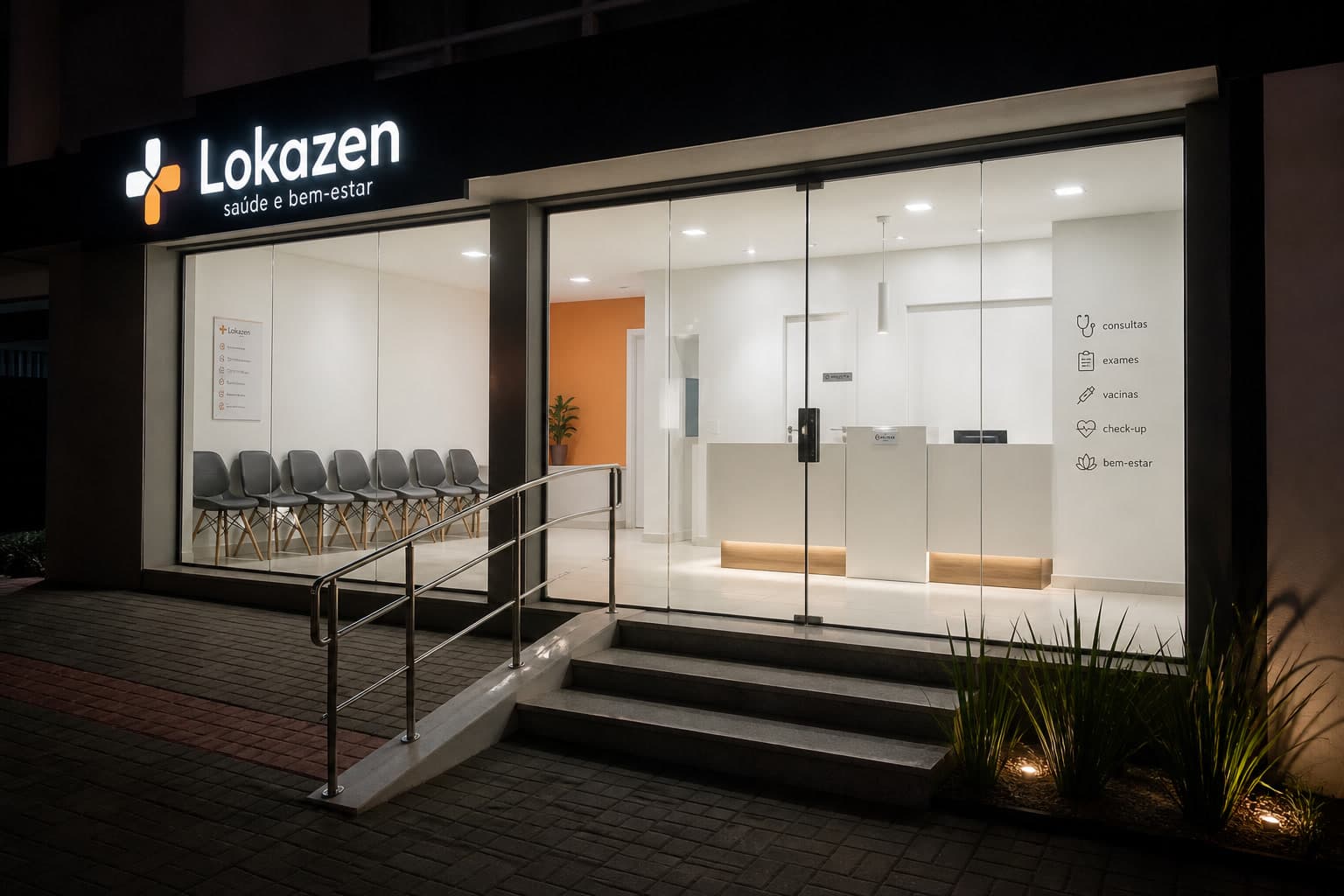
Healthcare is not one leasing category
A single-specialty consulting clinic, a multi-specialty polyclinic, a sample collection centre and a full diagnostics or imaging unit get discussed as "medical space" and then get shortlisted from the same list of vacant units. They should not be. One is an appointment business that can sit two floors up; one is proximity retail that fails one floor up; one is a structural, electrical and regulatory engineering problem before it is a real estate decision.
State the gap before the guidance. Lokazen publishes verified tracked outlet counts for apparel, salon, electronics, footwear, jewellery, pharmacy, gym, eyewear, grocery, coworking and books. It does not publish tracked counts for clinics, polyclinics, diagnostics centres or hospitals, by city or by zone. So this guide prints no clinic census and no zone chart of clinics. What it does use is the one healthcare category that is tracked (pharmacy, at 592 outlets mapped by zone) because pharmacy is the published proof of where healthcare demand in Bangalore physically sits.
The pharmacy map is the healthcare demand map
Almost every retail category in Bangalore concentrates where commercial density is highest. Pharmacy does the opposite, and the contrast is stark enough to be the anchor for any healthcare siting decision.
Koramangala is among the densest commercial zones Lokazen tracks, with 854 operating outlets, and it carries 5 pharmacies. Hebbal carries 140 outlets and 19 pharmacies. That is 0.6 per 100 against 13.6 per 100, a more than twentyfold difference running in the opposite direction to footfall.
The reason transfers almost completely to clinics and diagnostics. Healthcare is a proximity purchase made under mild time pressure, by someone starting from home, often unwell, often accompanied. Nobody browses for it and nobody travels across the city for routine care. A clinic on a high-footfall retail street is largely serving people who are not going to consult a doctor while shopping. The full reasoning is in our pharmacy leasing guide, and the same residential-inversion logic drives the veterinary and clinical formats in our pet and pet-care guide.
Two practical consequences. First, shortlist from residential density outward, not from a commercial high street inward, Hebbal, Yelahanka, JP Nagar and the residential pockets of the western and southern markets before Indiranagar or Koramangala. Second, pharmacy co-location is a genuine signal, not just a convenience. A pocket that already supports pharmacies at high density has demonstrated exactly the catchment behaviour a clinic depends on, and the adjacency benefits both formats.
Three formats, three different units
The fourth row is the one that most often derails a lease late. Heavy imaging equipment is not a fitout item you resolve after signing: it imposes a floor load requirement, a shielded room specification, an equipment access route from the street to the final position that must physically accommodate the machine, a three-phase power and backup requirement, and an HVAC load. Any one of those can render an otherwise ideal unit unusable. If your format includes imaging, the structural and access survey precedes heads of terms. That is the same discipline our gym and fitness studio guide argues for load-bearing fitness formats, and it applies with more force here because the equipment is both heavier and regulated.
The floor decision, and where the money is
Across every pocket Lokazen benchmarks, upper-floor rent lands near 50% of the ground-floor typical, and the ratio is stable from premium to value tiers, MG Road 300 against 575, Koramangala 5th Block 180 against 350, Hebbal Residential Commercial 120 against 220, Yelahanka New Town 55 against 95.
For consulting clinics, that discount is the single largest lever available, and it is available because a clinic is an appointment business. The patient has a booking, knows the address, and is not converted by pavement impulse. That is precisely the structural condition that makes upper floors work for salon (our salon and spa guide works the same arithmetic), and it holds for consultation-led healthcare.
It does not hold for a sample collection centre, which behaves like pharmacy: a proximity-convenience format whose customer will use the next one down the road rather than climb a floor. And it holds for diagnostics only where the load and equipment access questions can be answered on an upper floor, which they frequently cannot.
Worked example without inventing consultation volumes: a 1,200 sqft clinic on the ground floor at Hebbal Residential Commercial (Rs 220) costs about Rs 31.7 lakh a year. The same clinic on the first floor in the same pocket, at Rs 120, costs about Rs 17.3 lakh: a saving of roughly Rs 14.4 lakh a year for a format whose patients arrive with an appointment. In Yelahanka New Town, the first-floor case at Rs 55 is about Rs 7.9 lakh a year. For a first clinic, that difference is often the difference between a sustainable ramp and a lease that has to be right immediately. See the area-wise commercial rent guide and the value-pocket guide for the full map.
The compliance gates, before the lease
Healthcare is the most regulated use a commercial landlord will host, and the regulatory position has to be established before heads of terms, not during fitout. These are the gates to raise with your own advisers and the relevant authorities. This is a leasing checklist, not legal or regulatory advice, and requirements vary by format, scale and building.
- Clinical establishment registration. Karnataka regulates private clinical establishments, and registration imposes conditions on the premises themselves, not just on the practitioner. Confirm the unit can satisfy them before you commit.
- Biomedical waste handling. Segregation, storage and authorised-operator collection require physical space and an access route that many small units cannot provide. Landlords and residential societies treat this as a flashpoint; resolve it in writing in the lease.
- Radiology and imaging approvals. Any X-ray, CT or similar installation brings a separate regulatory track covering shielding, room layout and equipment registration. This is the longest lead-time item in a diagnostics fitout and the one most likely to disqualify a unit outright.
- Building use, occupancy and fire clearance. Confirm the unit's sanctioned use permits a clinical establishment, and that fire and occupancy clearances cover it at your intended floor and footprint. The general point that compliance is a siting constraint rather than a paperwork afterthought is made for F&B in our FSSAI, fire NOC and signage compliance guide, and the structure of the problem is identical here.
- Society, association and neighbour consent. Patient footfall, ambulance access, waste collection and extended hours all generate objections. In mixed residential buildings this is frequently the binding constraint, and it is far cheaper to test early than to discover in month three.
- Signage rights. For an upper-floor clinic, street-level signage is not cosmetic. It is how patients find you. Get it in the lease rather than in a conversation.
Dual read: expanding operator vs property owner
If you are opening or expanding a clinic or diagnostics brand
Name the format first, then shortlist from residential density outward, then eliminate on the physical and regulatory gates, most candidate units should die on access, load, waste or consent rather than on rent. Count competing clinics and diagnostics inside the realistic travel radius on foot; healthcare density is self-limiting per residential pocket in the same way pharmacy is, so a second comparable clinic on the same stretch usually splits a catchment rather than growing one. That is the same trap our saturation trap analysis describes for F&B. For a multi-site rollout, sequence deliberately using our multi-outlet expansion sequencing guide, and check the term sheet against our five signals guide before committing to a heavy medical fitout. Start a brand search to see verified inventory in the residential pockets that actually fit.
If you own the unit
A clinical tenant fits out heavily, is regulated, and therefore tends to stay for a long term, which makes healthcare one of the better covenants available for space that retail does not want, particularly first floors and larger plates on residential approaches. Three things decide whether the deal closes.
- Establish the regulatory position early. Sanctioned use, occupancy and fire clearance, whether the building permits clinical use, and where biomedical waste can be stored and collected. Clearing these before marketing prevents a failed LOI cycle, which is the most common way medical deals die.
- Have the physical facts ready. Step-free or lift access and lift dimensions, floor load rating, sanctioned three-phase power and backup coverage, water and drainage capacity, washroom provision, and parking counted at peak OPD hours. Publishing them shortens the decision, the argument in listing specs that help brands decide faster and the owner checklist.
- Price the floor, not the aspiration. A first floor quoted anywhere near the ground-floor rate will not lease to a clinic that has the alternative of another building at roughly half. Benchmark upper floors at about 50% of the pocket's ground-floor typical, per our rent-pricing guide, and if the unit is on a premium strip with low pharmacy density, recognise that healthcare is probably not the tenant that rescues it. List the unit with Lokazen to reach operators searching your pocket specifically.
Practical checklist before you sign
- Name the format (collection centre, single-specialty clinic, polyclinic or diagnostics) in the requirement and in the lease use clause.
- Shortlist by residential density, using pharmacy density as the published proxy, rather than by commercial footfall.
- Run the upper-floor case explicitly for consultation formats, at roughly half the pocket's ground-floor typical, and secure street-level signage rights in the lease.
- Survey structure and access before heads of terms if the format includes imaging, floor load, equipment route, shielding feasibility, three-phase power.
- Resolve biomedical waste storage and collection in the lease, in writing, with the landlord and the building.
- Confirm sanctioned use, occupancy and fire clearance cover clinical use at your floor and footprint.
- Test society and neighbour consent early on patient footfall, hours, ambulance access and waste.
- Count competing clinics on foot inside the realistic travel radius. Do not substitute a national chain's outlet claim for a local count.
A note on the data
Pharmacy figures are verified operating outlets in Lokazen's tracked inventory for 2026: 592 citywide, and by zone Hebbal 19 of 140 outlets (13.6 per 100), Yelahanka 30 of 403 (7.4), JP Nagar 30 of 477 (6.3), Sanjaynagar / RT Nagar 5 of 184 (2.7), Jayanagar 21 of 877 (2.4), Indiranagar 3 of 494 (0.6) and Koramangala 5 of 854 (0.6). Independent neighbourhood chemists are under-represented relative to branded chains, so true pharmacy counts are higher; the density contrast between zones is the robust finding. Rent figures are pocket-level benchmarks across the 124 commercial pockets Lokazen tracks, ground-floor rupees per sqft per month on carpet area, cross-checked against 145 live ground-floor retail and restaurant listings. Annual rent examples are arithmetic on those benchmarks.
Lokazen does not publish tracked outlet counts for clinics, polyclinics, diagnostics centres or hospitals, by city or by zone, and none is estimated here. Pharmacy is used strictly as a published proximity-category analog for where healthcare demand sits, not as a substitute for a clinic census. Format size bands are planning conventions rather than measured data, and the compliance list is a leasing checklist to verify with your own advisers and the relevant authorities, not legal or regulatory advice. When clinic and diagnostics categories are tracked to the same standard as pharmacy, this guide should be updated with counts.
Work with Lokazen
Whether you are expanding retail or F&B, evaluating a mall offer, or listing a high-potential unit, Lokazen combines verified inventory with location intelligence and expert placement support.
Start your brand search or explore location intelligence on lokazen.in.
Frequently asked questions
- Where should I open a medical clinic in Bangalore?
- In residential catchments rather than on destination high streets. The published pharmacy map is the clearest evidence: Hebbal carries 19 pharmacies against 140 total outlets (13.6 per 100) while Koramangala carries 5 against 854 and Indiranagar 3 against 494, both 0.6 per 100. Healthcare is a proximity purchase made under mild time pressure by someone starting from home, so shortlist outward from residential density, and treat existing pharmacy density in a pocket as a positive signal rather than as competition.
- Can a clinic work on an upper floor?
- Usually yes, and it is often the best available economics. A consulting clinic is an appointment business (the patient has a booking and is not converted by pavement impulse) which is the same structural condition that makes upper floors work for salon. Upper-floor rent runs near half the ground-floor typical across every pocket Lokazen benchmarks. On a 1,200 sqft clinic in Hebbal Residential Commercial, ground floor at Rs 220 is about Rs 31.7 lakh a year against about Rs 17.3 lakh on the first floor at Rs 120. Secure lift access, step-free entry and street-level signage rights in the lease. Sample collection centres are the exception, they behave like pharmacy and need ground floor.
- How many clinics and diagnostics centres are there in Bangalore?
- Lokazen does not publish tracked outlet counts for clinics, polyclinics, diagnostics centres or hospitals, by city or by zone, so no figure appears in this guide. The one healthcare category tracked is pharmacy, at 592 verified operating outlets mapped across seven zones. Until clinic categories are tracked to the same standard, count competing clinics on foot inside your catchment rather than relying on national chain outlet claims.
- What disqualifies a unit for a diagnostics centre with imaging?
- Four things, any one of which is fatal: insufficient floor load capacity for heavy equipment, no viable equipment access route from the street to the final installation position, no feasible shielded room layout, and inadequate three-phase power with backup. HVAC load comes next. Because these are structural and regulatory rather than cosmetic, the survey belongs before heads of terms, imaging approvals are typically the longest lead-time item in a diagnostics fitout.
- What compliance issues affect leasing medical space in Bangalore?
- Clinical establishment registration in Karnataka imposes conditions on the premises themselves, not only on the practitioner. Biomedical waste segregation, storage and authorised collection need physical space and an access route many small units lack. Radiology and imaging carry a separate approval track covering shielding and room layout. You also need to confirm that sanctioned use, occupancy and fire clearance cover clinical use at your floor and footprint, and test society or neighbour consent on patient footfall, hours, ambulance access and waste. Verify all of these with your own advisers and the relevant authorities before signing.
- What should a property owner prepare before listing a unit for medical use?
- The regulatory position and the physical facts. Confirm sanctioned use, occupancy and fire clearance permit clinical use, and identify where biomedical waste can be stored and collected, clearing these before marketing prevents the failed LOI cycle that kills most medical deals. Then publish lift access and dimensions, step-free entry, floor load rating, sanctioned three-phase power and backup, water and drainage capacity, washroom provision, and parking counted at peak OPD hours. Price upper floors at roughly half the pocket's ground-floor typical; a first floor quoted near the ground-floor rate will not lease to a clinic.
Read next
- Category Guide

Grocery and Supermarket Retail Space in Bangalore: 2026 Leasing Guide
11 min read
- Category Guide
Home Decor and Furniture Retail Space in Bangalore: 2026 Leasing Guide
12 min read
- Category Guide
Kids, Toys and Maternity Retail Space in Bangalore: 2026 Leasing Guide
12 min read
- Category Guide

Bakery and Dessert QSR Space in Bangalore: 2026 Leasing Guide
11 min read
- Category Guide

Electronics and Mobile Retail Space in Bangalore: 2026 Leasing Guide
11 min read
- Category Guide

Apparel and Footwear Space in Bangalore: 2026 Leasing Guide
9 min read
Work with Lokazen
Brands get scored Bangalore shortlists from verified listings. Owners get their space in front of brands that are actively looking.
More data-led guides on the Lokazen blog.