The ORR and Bangalore's Peripheral Corridors: Commercial Space Guide 2026
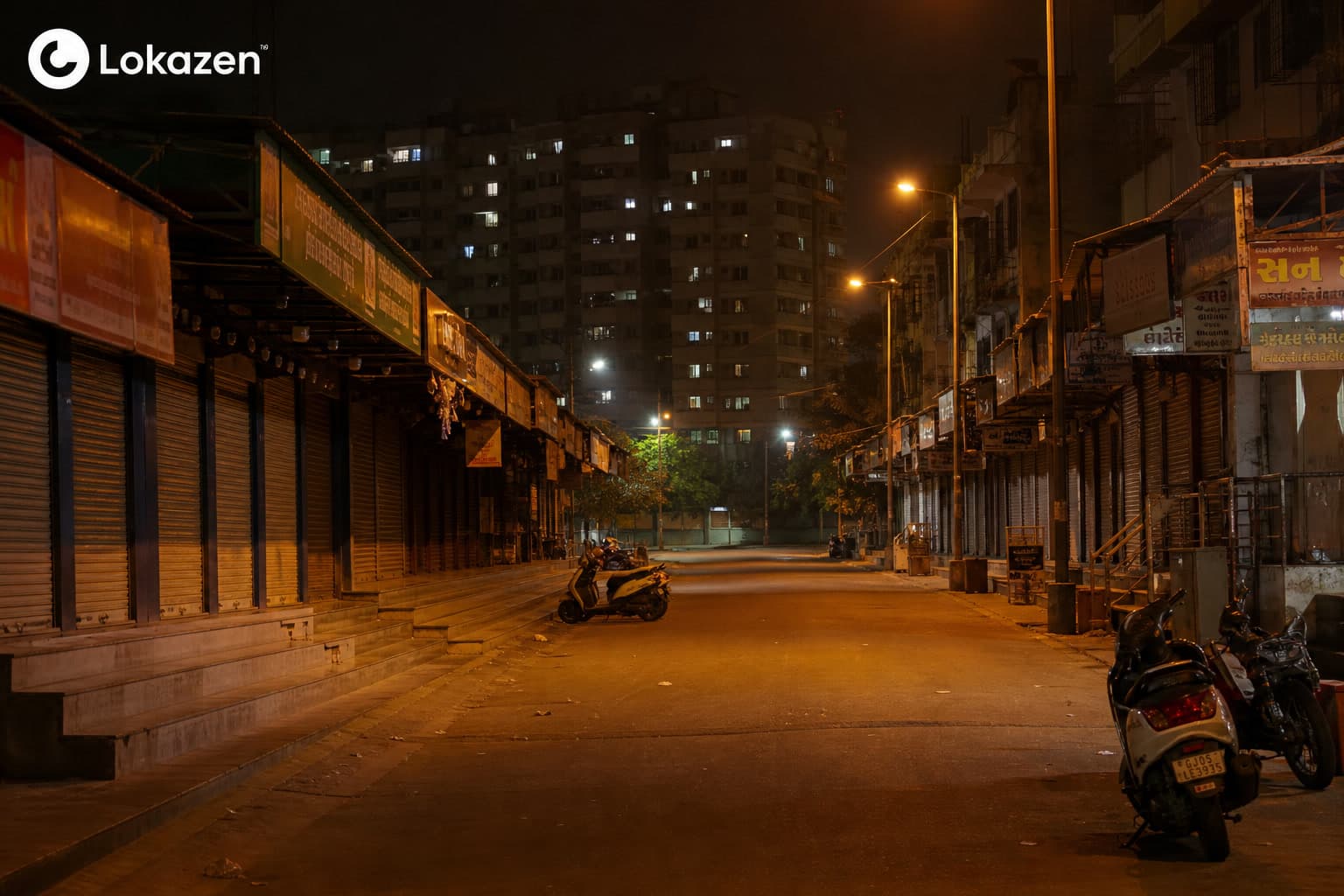
The ring is not a market
"On the ORR" is one of the least informative things that can be said about a commercial unit in Bangalore. The Outer Ring Road and the peripheral arterials that connect to it span the widest internal rent range of any single geographic idea in the city: from about Rs 68 per sqft per month on ground floor at Bommasandra Commercial to about Rs 250 at Nagavara ORR. That is a 3.7-fold spread around one road, before you compare catchment type, daypart, or footfall composition, which differ just as sharply.
This guide segments the periphery into four arcs, sets out what the published outlet and rent data supports for each, and says plainly where the data does not exist. For the individual corridors we have already covered in depth, see our Marathahalli and ORR guide, Bellandur and ORR East guide, Electronic City guide, Sarjapur Road guide and Whitefield guide.
Rent around the ring
Across the 124 commercial pockets Lokazen benchmarks, ground-floor rent runs from about Rs 58 to Rs 575 per sqft per month, and across 145 live ground-floor retail and restaurant listings the median ask is about Rs 200 with the lower quartile near Rs 135. Most of the ring sits at or below that lower quartile, which is the periphery's entire commercial proposition.
Read the top and bottom of that chart as two different businesses. A 1,500 sqft ground-floor unit at Nagavara ORR (Rs 250) costs about Rs 45 lakh a year; the same footprint at Bommasandra (Rs 68) costs about Rs 12.2 lakh. Both are "peripheral Bangalore". Neither tells you anything useful about the other. The full citywide map is in our area-wise commercial rent guide, and the sub-Rs-120 tier in our value-pocket guide.
Four arcs, four propositions
The north arc: Hebbal, Nagavara, Manyata
The most expensive peripheral stretch, and the only one where ring frontage carries a genuine premium. Nagavara ORR benchmarks at Rs 250 typical and Manyata Tech Park Periphery at Rs 220, against Hebbal / North ORR at Rs 190. The premium is earned by a rare combination: large office employment and an established residential base in the same catchment, so the demand curve is not purely weekday.
The composition data supports that reading. Hebbal carries 140 tracked outlets of which 19 are pharmacies (13.6 per 100, the highest pharmacy density of any sub-market Lokazen tracks), a residential-services signature rather than a footfall one. Immediately north, Yelahanka carries 403 tracked outlets at Rs 95 to Rs 115 ground-floor rent, which is the cheapest genuinely deep catchment adjacent to the ring anywhere in the city. The full picture is in our Hebbal and North Bangalore guide and our Yelahanka and airport corridor guide.
The east arc: KR Puram, Marathahalli, Bellandur, Sarjapur, Whitefield
The deepest existing commercial fabric on the ring, and the arc most brands mean when they say ORR. The published locality counts are the most useful comparison available:
Marathahalli tracks 226 active outlets across 200 distinct brands and Bellandur 159 across 137 brands: a real but noticeably thinner base for a zone anchoring comparable tech campuses. The east arc's defining feature is that each of these localities contains two catchments wearing one name: the ring or arterial frontage, which runs on a weekday workforce rhythm with high raw footfall and largely transit intent; and the residential interior a short distance behind it, which runs on family and household demand with genuine destination intent.
That distinction decides format more than the rent does. Junction and frontage positions suit quick-transaction formats (QSR, convenience, pharmacy, mobile and accessories) because transit footfall converts on speed rather than on consideration. Considered-purchase and dwell formats generally do better a short distance into the interior, at lower rent, serving the household economy. Trying to serve both from one lease is the most common and most expensive mistake on this arc.
Pocket benchmarks on the east arc: EPIP Zone / Whitefield Main Rs 240, Sarjapur Road Wipro Junction Rs 220, Domlur / HAL Airport Road Rs 220, Bellandur Core Commercial Rs 200, KR Puram Main Road Rs 110. Note the last figure: the northern end of the east arc is less than half the price of the Whitefield end, and it is on the same road.
The south arc: Hosur Road, Electronic City, Bommasandra
The cheapest arc, and the most structurally weekday-dependent. Electronic City Phase 1 Main Strip benchmarks at Rs 80 typical, Phase 2 at Rs 105, the Electronic City Food Court Cluster at Rs 75, and Bommasandra Commercial at Rs 68: the lowest tracked typical on the ring. Electronic City carries 222 active outlets across 186 distinct brands.
The trade here is explicit and should be stated as such: you are buying the lowest rent in peripheral Bangalore in exchange for the thinnest weekend demand. A format that needs seven-day throughput to reach its rent-to-revenue target will find that Saturday and Sunday are structurally weak on a campus-driven strip, and no amount of merchandising fixes a catchment that goes home at the weekend. Formats that work here are either weekday-throughput businesses, delivery-hedged hybrids, or large-format operations that need cheap area rather than footfall.
The west arc: Peenya, Tumkur Road, Mysore Road, Kengeri
The arc that almost never appears on a brand shortlist and is the natural home for large-format retail. Peenya Market Commercial benchmarks at Rs 58 (the lowest of all 124 tracked pockets) with Tumkur Road Commercial at Rs 65, Kengeri Satellite Town at Rs 78, Kengeri Main Road at Rs 88 and Mysore Road Commercial at Rs 95.
These are industrial-commercial and arterial addresses with poor pedestrian footfall and good vehicular access, which is precisely the profile a floor-hungry category wants. A 6,000 sqft showroom at Rs 58 costs about Rs 41.8 lakh a year against about Rs 3.46 crore for the same footprint on Indiranagar Double Road. Our home decor and furniture guide works that arithmetic through; the west arc is where it lands. For the surrounding fabric, our Vijayanagar and west Bangalore guide covers a zone carrying 686 tracked outlets.
Which formats the periphery actually rewards
Two cross-cutting opportunities are worth naming. First, upper floors on the periphery are the cheapest large plates in Bangalore. At roughly half the ground-floor typical, a first-floor plate at Electronic City Phase 1 is around Rs 45 per sqft and at Bommasandra around Rs 35, which is why floor-hungry categories that cannot monetise frontage should look here first. Our gym and fitness studio guide and coworking operator map both show that pattern in the published data: coworking carries 239 tracked locations distributed almost independently of retail density, and gym 571 outlets clustering off prime frontage.
Second, the interior-versus-frontage split is the periphery's most reliable arbitrage. On the east arc especially, moving a short distance off the ring changes both the rent and the intent of the footfall, usually in favour of considered-purchase formats. That is a shortlisting instruction, not a general observation: walk the interior streets before you commit to frontage.
What the periphery costs you, honestly
- Weekend and evening risk on the workforce arcs. Campus-driven strips are structurally weak outside weekday hours. Model the weekend explicitly; if the business needs seven-day throughput, either hedge with delivery or move to a residential-anchored pocket.
- Growth-corridor lease terms. Peripheral landlords frequently price step-ups on forecast appreciation rather than current catchment. Model your economics on today's demand and negotiate the escalation, not the headline rate. Check the term sheet against our five signals guide.
- Access and congestion as a conversion variable. On a ring road, the side of the carriageway, the position relative to a signal or flyover, and the availability of a legal turn can matter more than the rent. Walk and drive the approach at peak, from the direction your customer will come.
- Parking counted at peak, not at the site visit. Vehicular catchments live or die on this, and a Tuesday-morning inspection tells you nothing about Saturday afternoon.
- Infrastructure timing. Committed metro and road projects change peripheral catchments, but unevenly and often more slowly than owners forecast. Our metro rent-impact analysis covers what actually happens along a line.
- Thinner comparable evidence. Fewer transactions per pocket means benchmarks are wider and negotiation depends more on the specific unit than in a dense high street.
Dual read: expanding brand vs property owner
If you are expanding onto the periphery
Choose the arc before the unit, and the catchment type before the frontage. Sequence the north arc for anything needing seven-day residential demand, the east arc's interior for considered formats and its frontage for quick-transaction formats, the south arc only with a weekday or delivery-weighted model, and the west arc for floor-hungry large formats. Do not read a locality's outlet total as headroom, a total is a measure of existing supply, not of category whitespace, which is the argument of our saturation trap analysis. For rollout order, our multi-outlet expansion sequencing guide applies directly, and beyond rent per sqft covers the total-cost comparison you should actually be making. Start a brand search to see verified inventory by pocket.
If you own a peripheral unit
Your asset competes on economics and specification, not on prestige, and the internal spread on the ring means the most common pricing error is anchoring to the wrong arc.
- Price against your pocket, not the road. "On the ORR" spans Rs 68 to Rs 250 typical. An ask anchored to Nagavara or EPIP comparables on a KR Puram or Bommasandra unit will hold it vacant indefinitely. The method is in our rent-pricing guide, and the arithmetic of waiting is in our vacancy cost versus fair rent playbook.
- Sell the specification, because that is what peripheral tenants buy. Frontage width and carriageway side, legal turn access, parking bays counted at peak, sanctioned power and backup, clear height, floor load, and truck or loading access. Publishing these facts is what gets a peripheral unit shortlisted, see listing specs that help brands decide faster and the owner checklist.
- Quote upper floors as the bargain they are. At roughly half the ground-floor typical, an upper plate on the periphery is the cheapest large floor in the city, a real pitch to fitness, coworking, wellness and back-office tenants, but only if the quote reflects it and access and signage rights are clear. List the unit with Lokazen to reach brands searching your specific pocket.
A note on the data
Rent figures are pocket-level benchmarks across the 124 commercial pockets Lokazen tracks, expressed as ground-floor rupees per sqft per month on carpet area, cross-checked against 145 live ground-floor retail and restaurant listings with a median ask of about Rs 200 and a lower quartile of about Rs 135. Upper-floor figures apply the roughly 50% ratio observed consistently across those pockets. Annual rent examples are arithmetic on the benchmarks.
Outlet counts are verified active outlets from Lokazen locality guides: Marathahalli 226 across 200 distinct brands, Electronic City 222 across 186, Bellandur 159 across 137. These three are measured on the same locality-guide basis and are directly comparable to each other; they are not interchangeable with the broader zone totals used elsewhere in our category guides (Koramangala 854, Jayanagar 877, Yelahanka 403, Hebbal 140), so compare within a basis rather than across. Hebbal pharmacy density (19 of 140 outlets, 13.6 per 100), Yelahanka's 403 outlets, the coworking total of 239 and the gym total of 571 are from the same tracked inventory for 2026.
Lokazen does not publish a ring-wide outlet census, footfall indices for ORR pockets, vacancy rates by corridor, or a live-listing rent range specific to Marathahalli: our listing sample there is too small to generalise honestly, as our Marathahalli guide states. No such figures are estimated here. Arc groupings and demand-shape descriptions are qualitative readings of the published pocket and locality data, not a measured segmentation.
Work with Lokazen
Whether you are expanding retail or F&B, evaluating a mall offer, or listing a high-potential unit, Lokazen combines verified inventory with location intelligence and expert placement support.
Start your brand search or explore location intelligence on lokazen.in.
Frequently asked questions
- What is commercial rent on the Outer Ring Road in Bangalore?
- There is no single ORR rate, the internal spread is 3.7-fold. Pocket benchmarks run from about Rs 68 per sqft per month on ground floor at Bommasandra Commercial and Rs 80 at Electronic City Phase 1 Main Strip, through Rs 110 at KR Puram Main Road and Rs 200 at Bellandur Core Commercial, up to Rs 240 at EPIP Zone / Whitefield Main and Rs 250 at Nagavara ORR. Price and shortlist by pocket, not by the road name.
- Which part of the ORR is cheapest for a first outlet?
- The south and west arcs. Bommasandra Commercial benchmarks at about Rs 68 per sqft per month, Electronic City Phase 1 Main Strip at Rs 80 and Phase 2 at Rs 105; on the west, Peenya Market Commercial is Rs 58 (the lowest of all 124 tracked pockets) with Tumkur Road at Rs 65 and Mysore Road at Rs 95. The trade is real: the south arc is campus-driven with structurally thin weekend demand, and the west arc has poor pedestrian footfall and good vehicular access, which suits large formats rather than high-street retail.
- Should I take an ORR frontage unit or one in the residential interior?
- It depends entirely on format, and this is the periphery's most reliable arbitrage. Ring and arterial frontage carries high raw footfall that is largely transit-intent, which converts for quick-transaction formats, QSR, convenience, pharmacy, mobile and accessories. The residential interior a short distance behind runs on household demand with genuine destination intent, at lower rent, and suits considered-purchase and dwell formats. Serving both catchments from one lease is the most common mistake on the east arc.
- How many outlets does Lokazen track on the ORR corridors?
- There is no published ring-wide census. Locality-guide counts are available for individual corridors: Marathahalli 226 active outlets across 200 distinct brands, Electronic City 222 across 186, and Bellandur 159 across 137. Those three are measured on the same basis and are comparable to each other, but they are not interchangeable with the broader zone totals used in our category guides. Adjacent to the north arc, Yelahanka carries 403 tracked outlets and Hebbal 140.
- Why is north ORR more expensive than south ORR?
- Because the north arc has both large office employment and an established residential base in the same catchment, so demand is not purely weekday. Nagavara ORR benchmarks at Rs 250 typical and Manyata Tech Park Periphery at Rs 220, against Rs 80 at Electronic City Phase 1 and Rs 68 at Bommasandra. The composition data supports it: Hebbal's 13.6 pharmacies per 100 outlets is the highest tracked density in the city, a residential-services signature rather than a pure workforce one.
- What should a peripheral property owner do differently?
- Price against your pocket rather than the road, because 'on the ORR' spans Rs 68 to Rs 250 typical and anchoring a KR Puram or Bommasandra unit to Nagavara or EPIP comparables will hold it vacant. Then sell the specification, since that is what peripheral tenants actually buy: frontage width and carriageway side, legal turn access, parking counted at peak, sanctioned power and backup, clear height, floor load and loading access. Quote upper floors at roughly half the ground-floor typical, a peripheral upper plate is the cheapest large floor in Bangalore and a genuine pitch to fitness, coworking and wellness tenants.
Read next
- Location Guide
Cox Town and Cooke Town: Commercial Space Guide 2026
8 min read
- Location Guide
BTM Layout by Stage: Commercial Space Guide 2026
11 min read
- Location Guide
Brookefield and ITPL Main Road: Commercial Space Guide 2026
11 min read
- Location Guide
Hebbal & Hebbal Kempapura: Commercial Space Guide 2026
12 min read
- Location Guide
Sarjapur Road & Electronic City: Commercial Space Guide 2026
12 min read
- Location Guide

Malleshwaram & Rajajinagar 2026: The Complete Commercial Space Guide for F&B and Retail Brands
11 min read
Work with Lokazen
Brands get scored Bangalore shortlists from verified listings. Owners get their space in front of brands that are actively looking.
More data-led guides on the Lokazen blog.