Comparing Commercial Fit Out Quotations in Bangalore
Published

Editorial illustration. Not a listed property, verified location or measured layout.
Two fit-out quotations can describe the same shop and still price different projects. One includes lighting installation; another allows for fixtures only. One assumes a clear, ready floor; another includes removal and surface preparation. The lower number becomes useful only after these differences are visible.
For a Bangalore brand choosing a commercial space, a comparable fit-out budget helps test whether the property is affordable to open. For an owner, a clear scope prevents promised building work from disappearing between the handover discussion and the contractor's proposal. Start with one written scope, ask every bidder to identify exceptions, and compare the cost of reaching the same finished condition.
This guide provides an original comparison method, two fictional worked examples and an award checklist. All example amounts are invented for arithmetic, exclude tax and are not Bangalore market rates, contractor offers or project estimates.
1. Give every contractor the same starting information
An early budget can support a shortlist, but its uncertainty should remain visible. A contractor pricing from photographs has different information from one who has inspected the unit and received coordinated drawings. Label each quotation with what the contractor actually reviewed.
Create a dated enquiry pack containing the measured layout, intended business format, equipment schedule, finish requirements, relevant building rules and a record of the existing condition. Identify the drawings by revision. If a proposed counter moves, issue the change to every bidder rather than explaining it separately on phone calls.
Ask the owner or building manager to confirm access for surveys. Record locked rooms, concealed services and anything the contractor could not inspect. Do not turn an unverified condition into an assumed inclusion just to complete the comparison sheet.
| Enquiry item | Minimum information to record | Why it affects the quote |
|---|---|---|
| Layout and quantities | Drawing revision and measurement basis | Different layouts produce different work |
| Existing condition | Retained items and inspection limitations | Reuse may require repair or replacement |
| Materials and equipment | Specification, model or approval process | Similar descriptions can conceal different products |
| Site access | Working windows, delivery route and storage | Installation logistics may change the method |
| Handover boundary | Owner work and tenant work | Each task needs an identified provider |
RICS's NRM 2 guidance describes a structured basis for measuring and describing building work. A small shop need not reproduce its full framework to benefit from consistent descriptions and quantities. NRM 2 is UK practice information, not a Bangalore statutory requirement.
2. Read the scope before the total
Break the quotation into work packages you can trace: removal and preparation, partitions and finishes, joinery, electrical work, plumbing, ventilation, equipment, signage and completion activities, as relevant to the project. Keep specialist design and review responsibilities explicit.
Within a package, ask what the price delivers. Does flooring include preparing the base, skirting, transport and installation? Does a counter include the specified finish, internal storage, hardware and service openings? Does an equipment line include delivery, positioning, connection and the agreed checks before use?
Quantities need a unit and a measurement basis. A shop's quoted area does not automatically equal its flooring area, wall area or chargeable joinery quantity. Where a rate is used, check both the rate and the quantity it multiplies. Where the price is lump sum, ask for the drawings and scope that define that sum.
Make four statuses visible: included, excluded, allowance and unresolved. An allowance is an amount put into the price for a stated item whose final selection or scope remains open. Ask how it will be adjusted. An unresolved item has no dependable price yet; enter “pending clarification” rather than zero.
Finally, keep each contractor's original quotation beside your comparison. Your interpretation of an inclusion should be confirmed by that contractor. A tidy spreadsheet does not change what they offered.
3. Put the quotations on an equivalent basis
Suppose a brand is comparing two contractors for a fictional Bangalore shop. Both received the same revised drawing set. After written clarification, Contractor A prices three originally omitted tasks. Contractor B confirms those tasks are included with the same specification and quantities.
The table shows a limited, like-for-like works comparison. It deliberately excludes taxes, professional fees, owner-supplied equipment and other opening expenditure; those still require separate budgeting.
| Comparison item | Contractor A | Contractor B |
|---|---|---|
| Original quoted works | Rs 12,40,000 | Rs 13,60,000 |
| Confirmed electrical completion addition | Rs 1,25,000 | Included |
| Confirmed removal and disposal addition | Rs 45,000 | Included |
| Confirmed final testing and handover addition | Rs 35,000 | Included |
| Comparable works subtotal | Rs 14,45,000 | Rs 13,60,000 |
| Remaining unresolved items in this example | None within this defined scope | None within this defined scope |
A's comparable subtotal is Rs 12,40,000 + Rs 1,25,000 + Rs 45,000 + Rs 35,000 = Rs 14,45,000. A initially appeared Rs 1,20,000 lower. On the clarified scope, B is Rs 85,000 lower.
That calculation establishes a price difference, not an automatic contractor selection. Check whether each can deliver the specification, programme and completion evidence. A cheaper alternative material or shorter warranty should be shown as a separate difference rather than buried in the subtotal.
If one missing item remains unpriced, the comparison remains incomplete. You may show a separately labelled planning allowance for internal discussion, with its basis and uncertainty, but do not present it as the contractor's confirmed price. Request revised quotations that incorporate the agreed clarifications before an award decision.
4. Separate the works price from the cash you need
An equivalent works subtotal is only one part of the opening budget. List design and professional fees, relevant approval costs, equipment bought directly, landlord or building charges, taxes and pre-opening expenditure separately where applicable. Check for overlap before adding them: a fee already included in the contractor's price should not appear twice.
Ask bidders to state their tax treatment clearly and have the project accountant review the actual position. Do not compare a tax-inclusive offer with a tax-exclusive offer or assume a particular tax credit will be available.
Then lay the payment schedule against the programme. Record what triggers each instalment, the evidence required, who verifies it and when payment is due. An advance, a materials milestone and a completed-installation milestone represent different cash commitments even when the total price is identical.
Maintain a separate list of refundable deposits, their holders and the conditions for return. Keep genuinely uncertain work visible in the risk budget. A general contingency does not resolve a known missing quote or an undecided design.
Lokazen's restaurant opening-cost guide gives the broader budgeting context. Use current project evidence for the actual figures.
5. Close the gaps between owner and contractor work
Bangalore commercial projects can involve the owner, building manager, tenant, designer and several specialist suppliers. The comparison should reveal where one party's work depends on another's. A contractor may price the internal installation while assuming the owner provides a usable connection point.
Prepare a simple interface schedule. The entries below are examples of questions to settle, not default obligations assigned by law or by a standard lease.
| Interface | Responsibility to confirm | Evidence before dependent work |
|---|---|---|
| Owner-provided connection point | Who delivers and verifies it | Agreed location and documented readiness |
| Penetration through building fabric | Who approves, forms and reinstates it | Approved detail and coordinated work scope |
| Directly purchased equipment | Who delivers, installs and connects it | Supplier and contractor scopes aligned |
| Shared-area work | Who obtains access and protects the area | Written building arrangements |
| Final handover | Who supplies records and closes snags | Agreed completion checklist |
For owners, the useful contribution is an accurate statement of what will be available and when. For brands, it is a coordinated brief that does not ask two suppliers to price the same task or leave both assuming the other will do it.
If owner work is delayed, ask the contractor to explain the programme and cost implications before treating the original completion date as achievable. Have the parties' advisers record the agreed commercial arrangements in the relevant documents. The fit-out and handover checklist provides adjacent planning context.
6. Agree how changes will be priced
Ask for a written change process before work begins. A change record should identify the request, affected drawing, added and omitted work, price adjustment, programme effect and person authorised to approve it. The contractor should distinguish a proposed change from one already authorised.
Here is a second fictional example. The agreed price includes a lighting allowance of Rs 18,000. A later selection costs Rs 27,000 for supply, and the clarified installation addition is Rs 6,000. Assume the original allowance is fully credited and no other charges apply.
The additional amount is Rs 27,000 + Rs 6,000 - Rs 18,000 = Rs 15,000 before tax. Adding the full Rs 33,000 without removing the original allowance would double-count Rs 18,000. In a real project, confirm precisely what the original allowance covered and how the contract treats its replacement.
Apply the same care to substitutions. A replacement product should have a recorded specification, price effect and technical review where needed. Avoid accepting “equivalent” as a complete description. Keep a running record of the original sum, agreed changes and unresolved proposals so the forecast remains understandable.
7. Make the award decision reviewable
Before selecting a contractor, check a relevant completed project and speak with the reference through a verified contact route. Ask about coordination, communication, completion records and handling of defects. Photographs show a finished appearance; they reveal less about how the work was delivered.
Use this final checklist:
- Every bidder has priced the identified drawing and specification revisions.
- Inclusions, exclusions and allowances have written answers.
- Quantities and material differences are explained.
- Critical inspection gaps have been resolved or clearly escalated.
- Owner works, direct purchases and specialist interfaces have named responsibility.
- The programme identifies access, decisions and deliveries it depends on.
- Payment triggers, changes, completion evidence and defect arrangements are understood.
- The approved comparison records its remaining uncertainty and decision owner.
The outcome should be a short recommendation with the selected scope, comparable price, reasons, open conditions and supporting quotations. Retain earlier versions. If the scope changes materially, revisit the comparison instead of carrying forward a decision made for a different project.
A commercial space becomes easier to evaluate when the fit-out assumptions are explicit. For your next Bangalore shortlist, bring the same operating brief and scope questions to each unit. Resolve the expensive unknowns while there is still time to change the property or the plan.
Sources and scope
- RICS New Rules of Measurement overview and NRM 2 detailed measurement guidance: background on consistent work descriptions, quantities and pricing structure. The official overview identifies the 2021 edition, reissued as practice information in 2022.
- Lokazen's linked opening-cost and fit-out articles provide related context. No historical market figures from those articles are adopted here.
- The worksheets, comparison process and worked examples are original editorial tools. Both examples are fictional and exclude tax. Source review completed on 14 October 2026, India time.
Frequently asked questions
- Is a per square foot fit out quote enough?
- It can support an early discussion if its scope and area basis are clear. Before appointment, obtain the specifications, quantities or lump-sum boundaries, exclusions and assumptions behind it. The rate alone cannot show whether two offers deliver the same result.
- Should I always choose the lowest quotation?
- Compare equivalent scope first, then assess capability, delivery plan, payment terms and completion arrangements. Record the reasons for the choice. An unresolved technical or scope gap should remain visible even when a price looks attractive.
- How many quotations should I collect?
- Seek enough credible alternatives to compare the work meaningfully. Two complete, comparable offers can reveal more than several vague totals. If only one suitable contractor is available, request a detailed breakdown and independent professional review appropriate to the project.
- What does turnkey include?
- Ask for a written definition in that particular offer. Confirm design, approvals, building interfaces, equipment, installation, testing and handover individually. The label alone does not tell you which tasks or costs the contractor has accepted.
- Can an owner contribution reduce the fit out budget?
- Record the agreed contribution, its scope, payment conditions and timing. Show who pays each invoice and when reimbursement occurs. Do not subtract an informal promise from the cash requirement or count the same work in two budgets.
- What if a contractor cannot price an item yet?
- Record the missing information, responsible person and decision date. Keep the item unresolved until a dependable price is available. Any internal planning allowance should remain clearly distinct from the contractor's offer and the agreed contract sum.
- Is this a construction contract or technical specification?
- No. It is a comparison workflow. Use appropriate design, engineering, quantity-surveying, accounting and legal advice for your project. The illustrative amounts and responsibility questions do not establish prices, technical suitability or legal obligations.
Read next
- Playbook
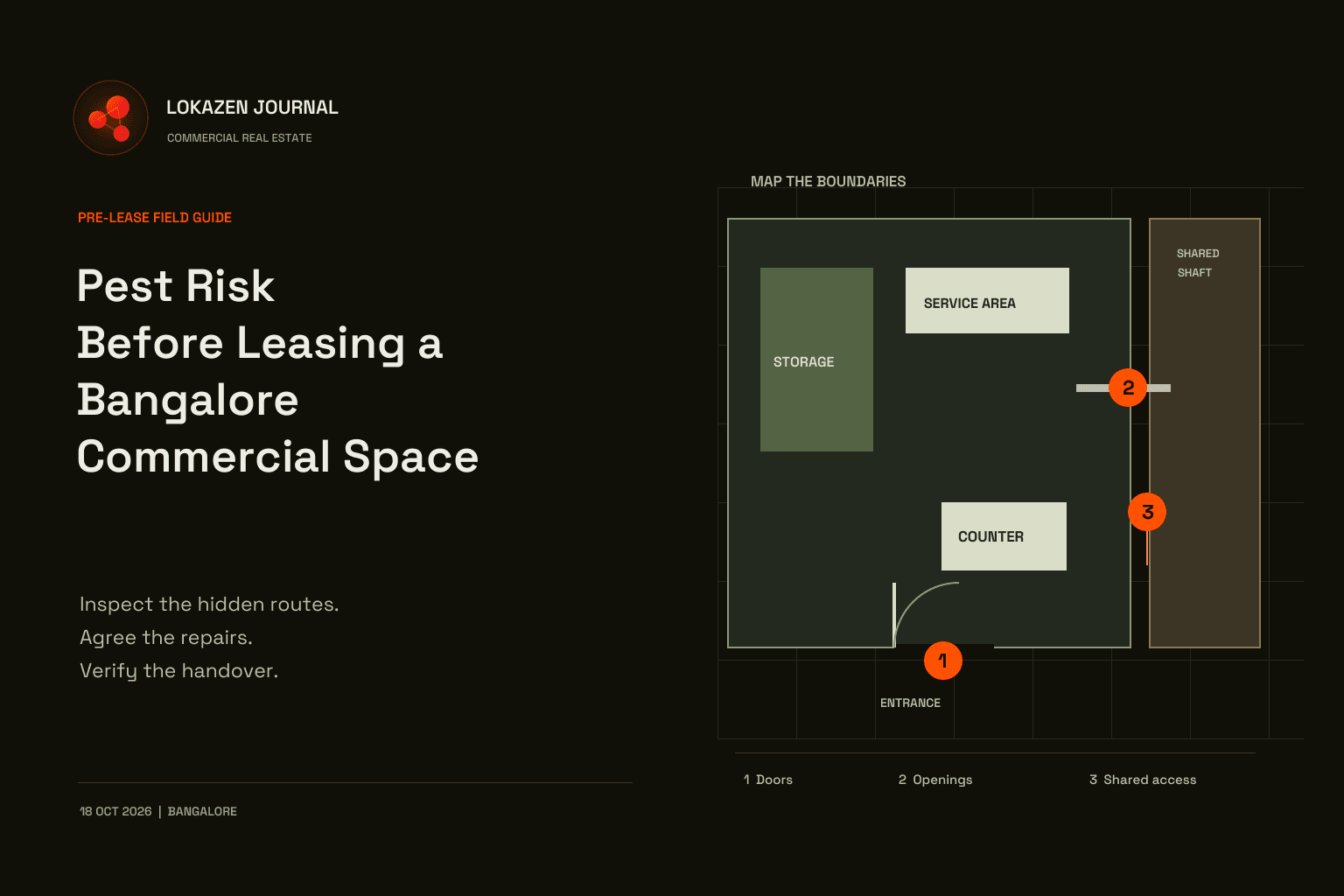
Pest Risk Before Leasing a Bangalore Commercial Space
13 min read
- Playbook
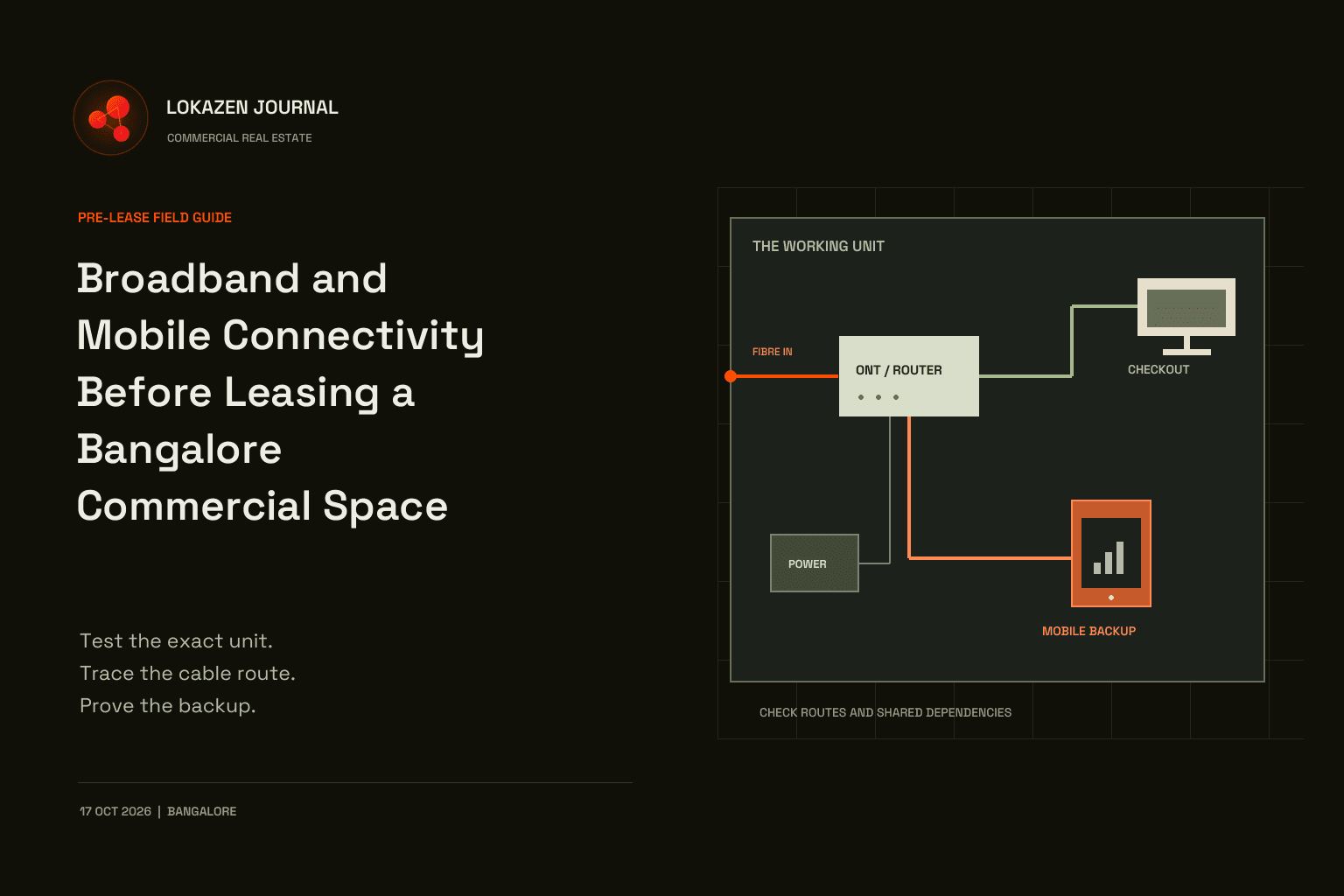
Broadband and Mobile Connectivity Before Leasing a Bangalore Commercial Space
10 min read
- Playbook

Waste Storage and Collection Before Leasing a Bangalore Restaurant
10 min read
- Playbook

Noise and Neighbour Compatibility Before Leasing a Bangalore Commercial Space
10 min read
- Playbook

Checking Kitchen Exhaust Before Leasing a Bangalore Restaurant
10 min read
- Playbook

How to Check Water Supply and Drainage Before Leasing a Bangalore Restaurant
10 min read
Work with Lokazen
Brands get scored Bangalore shortlists from verified listings. Owners get their space in front of brands that are actively looking.
More data-led guides on the Lokazen blog.